
Psychedelics
Psychedelic Integration: Making Sense of Your Trip and Turning Insight into Action
Jun
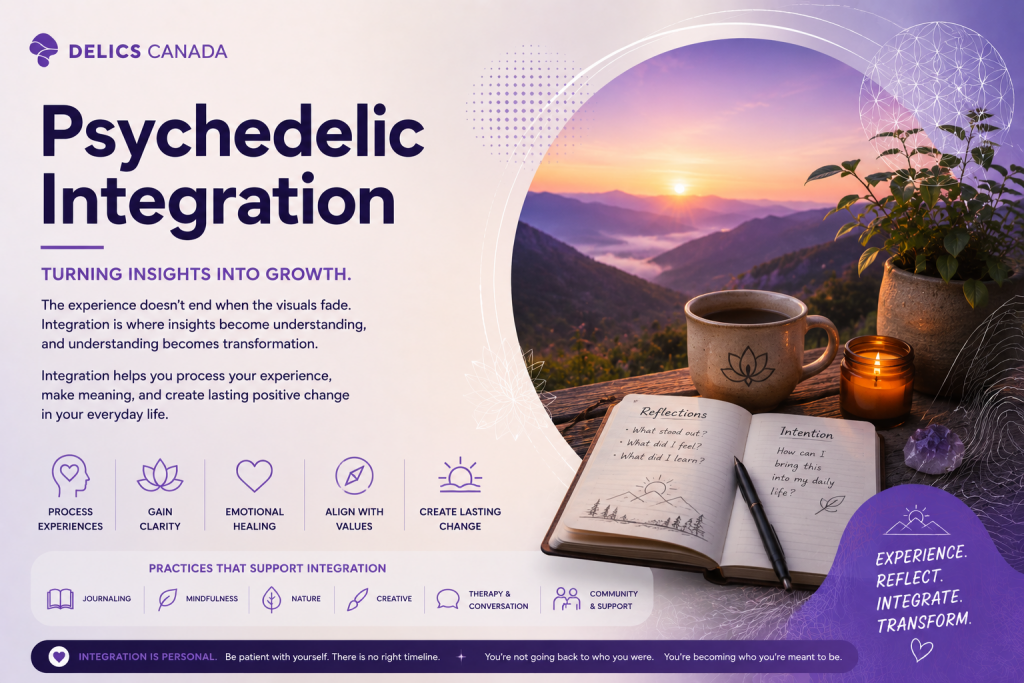
The journey doesn’t end when the visuals fade and the music softens. In many ways, it has just begun. You return from a profound psychedelic experience, your mind a kaleidoscope of intense emotions, fragmented memories, and powerful, world-altering insights. The feeling can be overwhelming, a mixture of awe, confusion, and an urgent sense of importance. This critical period, the gentle return to ordinary consciousness, is where the real work starts. This is the space for psychedelic integration, the conscious process of understanding, processing, and embodying the wisdom gained during your trip. It is the bridge that connects the mystical realms of a psychedelic journey to the concrete reality of your daily life. Without this bridge, a powerful experience can remain a beautiful but fleeting memory. With it, that same experience can become the bedrock of profound and lasting personal transformation. This article is designed to be your comprehensive psychedelic integration guide, providing you with the map and tools needed to navigate this crucial terrain and turn your insights into meaningful, positive action.
What is Psychedelic Integration and Why is it Crucial?
To truly grasp the importance of integration, we must first distinguish it from the psychedelic experience itself. The trip is the raw, unfiltered download of information; integration is the process of unpacking, organizing, and installing that information into your life’s operating system. Neglecting this step is like receiving a life-changing software update but never running the installation program. The potential for growth remains dormant, and worse, the unprocessed data can lead to feelings of alienation, confusion, or emotional instability.
Beyond the “Trip”: From Experience to Embodiment
Think of your psychedelic journey as climbing a vast mountain. From the summit, you were granted a breathtaking, panoramic view of your life’s landscape—the hidden valleys of your past, the winding paths of your present, and the distant peaks of your future. The experience was profound, but you cannot live on the mountaintop forever. Integration is the careful descent back into the valley, carrying the memory of that expansive view with you. It’s the process of using that newfound perspective to navigate the familiar terrain of your daily existence with greater wisdom and purpose. The goal is not to cling to the peak experience, but to embody its lessons in your everyday thoughts, feelings, and actions. It’s the difference between having a mystical experience and living a mystical life. A journey with a substance like LSD might reveal deep truths, but integration is what allows you to live those truths day by day.
The Goals of a Successful Integration Process
The primary goal of integration is to translate the abstract insights of a psychedelic state into concrete, positive changes in your life. This is not a passive process but an active engagement with the material that surfaced. A successful integration practice helps you make sense of complex visions, process and release difficult emotions that may have arisen, ground the expansive energy of the experience in your physical body, and ultimately, create a tangible action plan for personal growth. It is also a fundamental pillar of harm reduction. By providing a framework for understanding and processing the experience, integration minimizes the risk of psychological distress, such as prolonged anxiety or disorientation, and maximizes the potential for healing and positive outcomes. A well-structured approach, like the one offered in this psychedelic integration guide, ensures that the journey contributes to your well-being in a safe and sustainable way.
The Three Pillars of Psychedelic Integration: A Step-by-Step Guide
A robust integration practice can be built upon three foundational pillars: Reflection and Documentation, Embodiment and Somatic Practices, and Connection and Community. By engaging with all three, you create a holistic support system for your journey of transformation.
Pillar 1: Reflection & Documentation – Capturing the Insights
Immediately following a psychedelic experience, your mind is fertile ground. The insights are fresh, the emotional resonance is strong, and the memories are vivid. This is the critical window for capturing the essence of your journey before it begins to fade into the background of daily life. The most powerful tool for this is journaling. Writing is an act of translation, a way to give structure to the often ineffable and non-linear nature of a psychedelic state. Don’t worry about grammar or coherence; simply let your thoughts flow onto the page. To begin, you can use prompts such as: What were the most powerful or recurring moments? What specific feelings, both challenging and blissful, came to the surface? What images, symbols, or messages did you receive, and what do they mean to you? Did any specific memories or new perspectives on your relationships and life path emerge? Beyond writing, consider other forms of creative expression. Drawing, painting, sculpting, or even composing music can capture the non-verbal, sensory aspects of your experience that words alone cannot convey. Experiences with visually rich substances like Magic Mushrooms can be particularly well-suited to this form of creative documentation.
Pillar 2: Embodiment & Somatic Practices – Grounding the Energy
Psychedelic experiences are not just mental events; they are deeply felt in the body. The insights gained can feel expansive and ethereal, and it is crucial to ground this energy in your physical form to prevent feeling unmoored or disconnected. This is the pillar of embodiment. Somatic (body-based) practices help you bridge the gap between mind and body, allowing the wisdom of your journey to settle into your very cells. Gentle, mindful movement such as yoga or tai chi can help you reconnect with your physical self and process stored emotions. Breathwork is another potent tool, allowing you to regulate your nervous system and maintain a state of calm presence. Spending quiet time in nature is perhaps one of the most effective grounding practices, as it reconnects you to the fundamental rhythms of the earth. These practices are not about “working out†but about “working in.†They are a way of listening to the subtle language of your body and honoring it as an integral part of your healing journey. This focus on the physical is a vital part of any effective psychedelic integration guide.
Pillar 3: Connection & Community – Sharing Your Journey
You do not have to walk the path of integration alone. In fact, sharing your experience with trusted others can be one of the most healing and affirming aspects of the process. The act of telling your story—of giving voice to your journey and having it be heard and validated—is profoundly powerful. It helps you make sense of your own narrative and breaks the sense of isolation that can sometimes follow a deeply personal and transformative experience. This support can come from a close and trusted friend, a romantic partner, or a family member who is open and non-judgmental. For more structured support, consider seeking out a qualified psychedelic integration therapist or coach. These professionals are trained to help you navigate the complexities of the post-psychedelic state. Integration circles, where individuals share their experiences in a group setting, can also provide a powerful sense of community and shared understanding. Journeys with heart-opening substances like MDMA or 2-CB often powerfully underscore this fundamental human need for connection, making this pillar especially relevant.
Practical Tools and Techniques for Your Integration Toolkit
With the three pillars as your foundation, you can begin to build a personalized integration toolkit filled with practical, everyday techniques to support your ongoing journey. The key is to find what resonates with you and to practice it with consistency and self-compassion.
Creating Rituals and Routines
Integration is solidified through consistent action. The insights from your journey provide the blueprint for change; rituals and routines are how you build that change into the architecture of your life. If your experience revealed a deep need for more self-compassion, what would a daily ritual of self-compassion look like? Perhaps it’s starting your day with positive affirmations, taking five minutes for a loving-kindness meditation, or ending your day by journaling three things you appreciate about yourself. If you realized the importance of connecting with your creativity, you might schedule a weekly “artist date†to paint, write, or play music. These small, consistent actions are the threads that weave the wisdom of your journey into the fabric of your daily life. They don’t need to be grand gestures; their power lies in their repetition. This is a core principle that any useful psychedelic integration guide should emphasize.
Working with Challenging Experiences
Not all psychedelic experiences are blissful. Sometimes, they can be deeply challenging, bringing up difficult emotions, unsettling memories, or confronting truths. It is crucial to reframe these “bad trips†not as failures, but as profound opportunities for healing and growth. These challenging journeys often show us exactly what needs our attention, pointing to the unhealed wounds or limiting beliefs that hold us back. The key to integrating these experiences is to approach them with radical self-compassion. Do not judge yourself for the difficulty. Instead, get curious. What was the core message beneath the fear or sadness? What lesson was the experience trying to teach you? Journaling and speaking with a therapist are especially valuable here. It’s also important to remember that even with substances often perceived as gentler, like Ketamine, the integration of all experiences, pleasant or challenging, is what unlocks their long-term therapeutic potential.
Setting Realistic Expectations
Finally, it is vital to approach integration with patience and realistic expectations. Transformation is a marathon, not a sprint. The profound clarity you felt in the days after your journey may begin to fade as the demands of daily life return. Old habits and patterns of thought may resurface. This is not a sign of failure; it is a normal part of the process. Integration is a spiral path, not a linear one. You will revisit the same lessons again and again, each time from a slightly higher vantage point. Be gentle with yourself. Celebrate small victories. The goal is not perfection, but progress. Trust that the seeds planted during your journey are continuing to grow, even when you can’t see the sprouts. This long-term perspective is a cornerstone of a mature and effective integration practice, a point this psychedelic integration guide cannot stress enough.
FAQ: Your Psychedelic Integration Questions Answered
Navigating the path of integration can bring up many questions. Here are answers to some of the most common ones.
How long does the integration phase last?
This is one of the most frequent questions, and the simplest answer is that integration is an ongoing process, not a phase with a defined endpoint. The most intensive period of integration typically occurs in the first few weeks and months following a psychedelic experience, as this is when the material is freshest and the neuroplasticity is highest. However, the lessons and insights from a profound journey can continue to unfold and be integrated over a lifetime. It’s helpful to think of it less as a task to be completed and more as a new way of being in relationship with yourself and the world.
Do I need a therapist for integration?
While a therapist is not a strict requirement for everyone, a trained psychedelic integration professional can be an invaluable asset on your journey. They can provide a safe, supportive, and confidential space to process your experience, especially if you encountered challenging material, are dealing with a history of trauma, or simply feel stuck and unsure how to proceed. A good therapist acts as a guide, not a guru, helping you find your own answers within. That said, many people successfully navigate their integration process through self-directed practices like journaling, mindfulness, and community support. Using a comprehensive psychedelic integration guide like this one can provide a solid framework for that self-directed work.
What if I don’t feel like I got any insights from my trip?
It’s a common expectation that every psychedelic experience should be filled with earth-shattering revelations and profound mystical insights. However, this isn’t always the case. Some journeys are more subtle, quiet, or even confusing. Sometimes, the primary benefit is simply a reset for the nervous system or a break from ordinary patterns of thought, rather than a specific, articulable insight. If you feel this way, the integration process can be about exploring the absence of insight. What might it mean to simply rest and be, without pressure to “get†something? Be patient. The meaning of an experience can sometimes take weeks or even months to fully reveal itself.
Your Journey Continues
Psychedelic integration is the art and practice of turning the extraordinary into the everyday. It is the dedicated work that transforms a fleeting, powerful experience into a lasting foundation for a more conscious, authentic, and fulfilling life. It’s about honoring the wisdom you’ve been shown by weaving it, thread by thread, into the person you are becoming. This psychedelic integration guide is a starting point, a map to help you begin your journey. The true territory, however, is yours and yours alone to explore.
Ready to explore the tools that can support your journey? Browse our curated selection of products in the Delics Canada shop and take the next step in your path to wellness.
