Psychedelics
Canadian Psychedelic Decriminalization: 2026 Status Update
Jan
The conversation around psychedelics in Canada has never been more vibrant. With a groundswell of scientific research highlighting their therapeutic potential and a noticeable shift in public perception, many Canadians are left wondering where the country stands on the legality of these substances. Stroll through major cities, and you might see dispensaries for magic mushrooms operating with a surprising degree of openness, creating a confusing picture. Is the nation on the brink of a major policy shift? This article provides a clear and comprehensive status update on psychedelic decriminalization Canada 2026, cutting through the noise to give you the facts.
The Current Federal Stance: What the Controlled Drugs and Substances Act (CDSA) Says
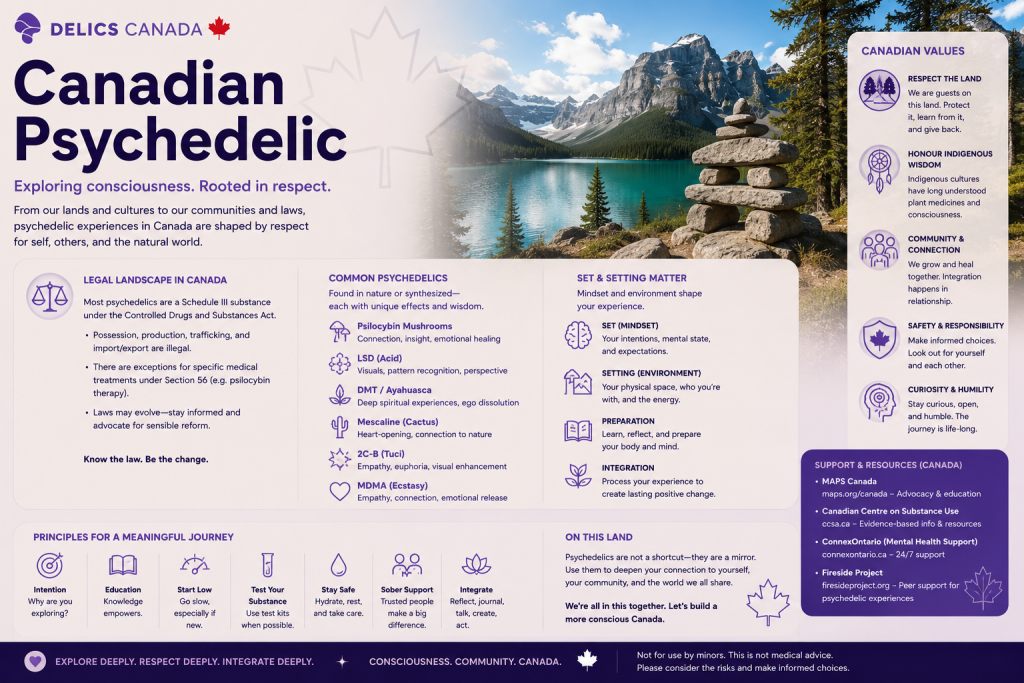
First and foremost, it is crucial to understand the foundational law governing controlled substances in Canada. The Controlled Drugs and Substances Act (CDSA) is the federal legislation that classifies drugs into different schedules, outlining the legal penalties for possession, trafficking, and production. As of 2026, the legal status of most well-known psychedelics is unambiguous: they are illegal for recreational use.
Substances such as psilocybin and psilocin (the active compounds in magic mushrooms), LSD, DMT, and MDMA are classified as Schedule III controlled substances. Others, like Ketamine, also sit on the schedules of the CDSA, making their possession without a prescription or proper authorization a criminal offense. This federal law applies uniformly across every province and territory. Despite what the presence of a local dispensary might suggest, the national legal framework remains firmly against the recreational use of these powerful compounds.
The “Grey Market” Phenomenon: Why You’re Seeing Dispensaries
If psychedelics are illegal, why are storefronts selling them? This is the core of the current confusion and mirrors the situation with cannabis in the years leading up to its nationwide legalization. These dispensaries operate in a legal “grey market.” They exist not because the law has changed, but largely due to a patchwork of local enforcement priorities. Some municipal police forces may choose to deprioritize action against these establishments, focusing their resources on other public safety concerns. However, this is a matter of discretion, not a grant of legality.
Raids can and do happen, and operators and customers alike face significant legal risks. Furthermore, the products sold in these unregulated shops come with no oversight for purity, dosage, or contaminants. This poses a considerable safety risk to consumers. While the temptation to explore the offerings at a local dispensary is understandable, it’s essential to recognize the legal and health-related dangers involved. For those curious about the different types of products being discussed in the broader psychedelic space, you can learn more about substances like magic mushrooms from a harm-reduction perspective.
Medical Access and Therapeutic Use: The Legal Pathways
While recreational use remains off-limits, the federal government has carved out specific, narrow pathways for accessing psychedelics for medical and therapeutic purposes. This is where the most significant and promising developments are taking place in the Canadian psychedelic landscape.
Health Canada’s Special Access Program (SAP)
Health Canada’s Special Access Program (SAP) is a critical route for legal access. The SAP allows healthcare practitioners to request access to restricted drugs, including psychedelics like psilocybin and MDMA, for patients with serious or life-threatening conditions where conventional treatments have proven ineffective. This is not an over-the-counter solution; it involves a formal application process and is reserved for cases of genuine medical need, such as end-of-life distress or treatment-resistant depression. Each application is considered on a case-by-case basis, underscoring the program’s cautious and medically supervised nature.
Provincial Regulations: Alberta Leads the Way
A landmark development occurred in January 2023 when Alberta became the first province in Canada to formally regulate the therapeutic use of psychedelics. Under its regulations, licensed psychiatrists can administer psychedelics to patients for mental health conditions as part of a structured psychotherapy program. This move was a monumental step, creating a provincially sanctioned framework for psychedelic-assisted therapy. It provides a model that other provinces may follow, but it’s important to note this is strictly a medical framework, not recreational psychedelic decriminalization Canada 2026.
Clinical Trials
A significant amount of legal psychedelic use in Canada occurs within approved clinical trials. Researchers across the country are conducting studies to rigorously evaluate the safety and efficacy of substances like ketamine and psilocybin for a range of conditions, including PTSD, anxiety, and addiction. These trials are the bedrock of evidence-based policy and are essential for moving the conversation forward.
What About Decriminalization? The BC Experiment and Beyond
Much of the discussion around drug policy reform has centered on decriminalization. In January 2023, British Columbia launched a three-year pilot project, granted by federal exemption, to decriminalize the personal possession of small amounts of certain illicit drugs, including opioids, cocaine, and methamphetamine. While psychedelics were not the primary focus, this experiment was a significant step in treating substance use as a health issue rather than a criminal one. However, the pilot faced challenges and was not renewed in its original form, ending in early 2026. The lessons from BC’s experience are now being carefully analyzed and will undoubtedly shape the future of any national conversation on the broader topic of psychedelic decriminalization Canada 2026.
The Future Outlook: What to Expect in 2026 and Beyond
So, where does this leave us in 2026? The legal landscape for psychedelics in Canada remains a complex tapestry. The overarching federal law is clear: recreational use is illegal. However, the momentum for medical and therapeutic use is undeniable, with programs like the SAP and Alberta’s regulatory framework providing legitimate, albeit restricted, access. Public support for therapeutic use is strong, and the body of scientific evidence continues to grow.
Looking ahead, we can expect the push for medical access to continue expanding. More provinces may adopt frameworks similar to Alberta’s, and the number of approved clinical trials is likely to increase. However, full recreational legalization or decriminalization on a national scale appears to be a more distant prospect. The path forward will likely be slow, incremental, and heavily guided by scientific data and public health outcomes. As we navigate this evolving landscape, focusing on education and harm reduction is more important than ever. Exploring the history and effects of substances like LSD or MDMA from credible sources can empower individuals to make informed and safer choices. The journey toward potential psychedelic decriminalization Canada 2026 is still in its early stages, and the next few years will be critical in shaping its direction.
FAQ: Your Questions Answered
Are magic mushrooms legal in Canada in 2026?
No, magic mushrooms (psilocybin) are not legal for recreational use in Canada in 2026. They are a Schedule III controlled substance. The only legal access is through Health Canada’s Special Access Program for medical purposes or within approved clinical trials.
Can I buy psychedelics online legally?
No. Any website selling psychedelics like MDMA, 2-CB, or Mescaline to the general public in Canada is operating illegally. These are unregulated sources, and purchasing from them carries both legal risks and significant health and safety concerns due to the lack of product testing and quality control.
What is the difference between decriminalization and legalization?
Decriminalization means that possessing a small amount of a substance for personal use is no longer a criminal offense, though it may still be subject to fines or other civil penalties. Legalization, on the other hand, means the substance is legal to produce, sell, and possess, and is typically regulated and taxed by the government, much like alcohol or cannabis.
Ready to learn more from a trusted source? While the legal landscape evolves, education is key. Browse our shop for harm-reduction resources and to learn more about the science and culture behind these fascinating compounds. Your journey to informed understanding starts here.
