
Psychedelics
Mescaline: The Forgotten Psychedelic Making a Comeback
Apr
In the vast and varied world of psychedelic substances, some compounds like psilocybin and LSD tend to steal the spotlight. But lurking in the shadows is a classic, powerful, and historically significant psychedelic that’s quietly making a comeback: mescaline. This comprehensive mescaline psychedelic guide will illuminate this forgotten gem, exploring its rich history, profound effects, and what you need to know about its resurgence in the modern psychedelic renaissance.
For centuries, indigenous cultures have revered mescaline-containing cacti for their spiritual and healing properties. Today, as interest in psychedelics for therapeutic and personal growth soars, more people are turning their attention to this natural and potent compound. Whether you’re a seasoned psychonaut or new to the world of psychedelics, this guide will provide you with a thorough understanding of mescaline and its unique place in the psychedelic landscape.
What is Mescaline?
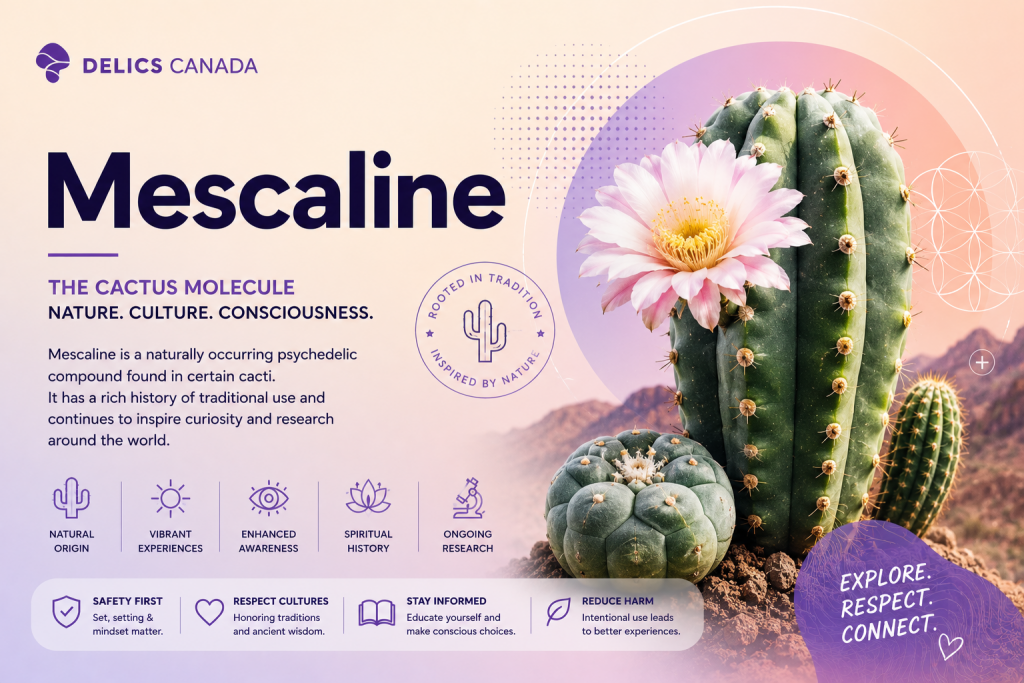
Mescaline is a naturally occurring psychedelic alkaloid found in several species of cacti, most notably the Peyote (Lophophora williamsii) cactus native to Mexico and the southwestern United States, and the San Pedro (Echinopsis pachanoi) and Peruvian Torch (Echinopsis peruviana) cacti from the Andes Mountains. It can also be synthesized in a laboratory, but it is most commonly associated with these sacred plants. As a psychedelic, mescaline alters perception, mood, and a host of cognitive processes, leading to a non-ordinary state of consciousness often described as mystical or visionary.
The effects of mescaline are primarily mediated by its interaction with the serotonin 5-HT2A receptor in the brain, a mechanism it shares with other classic psychedelics like LSD and psilocybin. However, the subjective experience of mescaline is often described as being more gentle, clear-headed, and emotionally warm compared to its more intense counterparts. This makes it an appealing option for those seeking a profound yet manageable psychedelic journey. Our mescaline psychedelic guide aims to provide a clear and comprehensive overview of this fascinating compound.
The Rich and Storied History of Mescaline
The story of mescaline is a long and fascinating one, deeply intertwined with the history of human spirituality and the quest for altered states of consciousness. This journey, which this mescaline psychedelic guide will now explore, begins thousands of years ago in the Americas and continues to this day, with a renewed interest in its therapeutic potential.
Ancient Roots in Indigenous Cultures
The use of mescaline-containing cacti is not a recent phenomenon. Archaeological evidence suggests that Native Americans have been using peyote for at least 5,700 years. For cultures like the Huichol and Tarahumara of Mexico, the peyote cactus is not just a plant, but a sacred teacher and a central part of their religious and cultural identity. They embark on annual pilgrimages to collect the cactus, which they then use in ceremonies to communicate with their deities, heal the sick, and receive guidance. Similarly, in the Andes Mountains of South America, the San Pedro cactus has been used for at least 2,000 years in healing and divinatory rituals. These ancient traditions, which have been passed down through generations, represent a profound and sophisticated understanding of the healing and spiritual potential of mescaline.
Mescaline in the Western World
Mescaline made its debut in the Western world in the late 19th century, when the German pharmacologist Arthur Heffter isolated the active compound from the peyote cactus in 1897. This was a significant milestone, as it allowed for the scientific study of mescaline and its effects on the human psyche. In 1919, another breakthrough occurred when the Austrian chemist Ernst Späth synthesized mescaline in the laboratory, making it more accessible for research and experimentation.
The 20th century saw a growing interest in mescaline among artists, writers, and intellectuals. The most famous of these was Aldous Huxley, whose 1954 book, The Doors of Perception, provided a detailed and eloquent account of his experiences with the substance. Huxley’s writings were instrumental in bringing mescaline to the attention of the general public and helped to shape the cultural conversation around psychedelics. However, despite this interest, mescaline was soon overshadowed by the more potent and easily manufactured LSD. The counterculture of the 1960s embraced LSD as its psychedelic of choice, and mescaline, with its longer duration and more subtle effects, was largely forgotten. The final nail in the coffin came in 1971, when mescaline was classified as a Schedule I drug under the UN Convention on Psychotropic Substances, making it illegal in most parts of the world.
The Mescaline Experience: A Journey into the Mind
Embarking on a mescaline journey is a commitment. It is a long and often profound experience that can last for up to 12 hours. The effects are often described as being more gentle and manageable than those of other classic psychedelics, but they are no less powerful. This section of our mescaline psychedelic guide will delve into the specifics of the mescaline experience, from the initial onset to the lingering afterglow.
The Onset and Peak
The first effects of mescaline are typically felt within 45 to 90 minutes of ingestion. This initial phase is often accompanied by a feeling of warmth and a sense of anticipation. Nausea and vomiting are common during this stage, particularly when consuming raw cactus material. While unpleasant, this purging is often seen as a cleansing and purifying part of the experience in traditional contexts. The peak of the experience usually occurs around the 2 to 4-hour mark and can last for 4 to 6 hours. It is during this time that the full spectrum of mescaline’s effects are felt.
The Plateau and Comedown
Following the peak, the experience transitions into a long and gentle plateau, which can last for several hours. During this time, the intense visual and psychological effects begin to subside, but a sense of wonder and introspection remains. The comedown is a gradual return to baseline consciousness, and it is often accompanied by a feeling of peace and contentment. The afterglow of a mescaline experience can last for several days, leaving the user with a renewed sense of purpose and a deeper connection to the world around them.
- Vivid Visuals: Mescaline is renowned for producing rich and intricate visual patterns, both with eyes open and closed. Users often report seeing geometric shapes, vibrant colors, and dream-like imagery.
- Altered Perception: Time may seem to slow down, speed up, or dissolve altogether. The perception of space and the self can also be significantly altered, leading to feelings of ego dissolution and interconnectedness with the universe.
- Emotional Shifts: The emotional tone of a mescaline experience is often described as euphoric, empathetic, and introspective. It can bring suppressed emotions to the surface and facilitate deep personal insights.
- Synesthesia: The blending of senses, such as “seeing” sounds or “hearing” colors, is a common feature of the mescaline experience.
Potential Risks and Harm Reduction
Like all psychedelic substances, mescaline is not without its risks. A comprehensive mescaline psychedelic guide must include a discussion of harm reduction. The most common side effects are physical, including nausea and vomiting, particularly in the initial stages of the experience. Other potential physical effects include increased heart rate, blood pressure, and body temperature. Psychologically, the experience can be challenging, and some users may experience anxiety, paranoia, or a difficult trip. It is crucial to approach mescaline with respect and caution.
Harm reduction practices are essential for a safe and positive mescaline experience. These include:
- Set and Setting: Ensure you are in a safe, comfortable, and familiar environment, and in a positive and prepared state of mind.
- Start Low, Go Slow: If you are new to mescaline, begin with a low dose to gauge your sensitivity to the substance.
- Have a Sitter: A sober and trusted friend can provide support and reassurance during the experience.
- Integration: Take time to process and integrate your experience afterward. Journaling, talking with a trusted friend or therapist, and spending time in nature can be helpful.
The Comeback of a Classic Psychedelic
In recent years, there has been a resurgence of interest in mescaline, both within the psychedelic community and in scientific research. As the limitations of more intense psychedelics like DMT and ibogaine become apparent, the gentle yet profound nature of mescaline is being recognized as a valuable tool for personal growth and therapeutic exploration. This renewed interest is a key reason for the creation of this mescaline psychedelic guide.
Researchers are beginning to explore the therapeutic potential of mescaline for a range of conditions, including depression, anxiety, and PTSD. While the research is still in its early stages, the long history of safe and effective use in indigenous cultures suggests that mescaline may have a significant role to play in the future of psychedelic medicine. As the legal landscape around psychedelics continues to evolve, we may see mescaline become more accessible for both therapeutic and personal use.
Frequently Asked Questions (FAQ)
How should I prepare for a mescaline experience?
Preparation is key to a safe and positive mescaline experience. This includes both mental and physical preparation. It is important to be in a positive and open state of mind, and to have a clear intention for your journey. It is also important to be in a safe and comfortable environment, free from distractions and potential stressors. A healthy diet and adequate rest in the days leading up to the experience can also be beneficial. As with any psychedelic, it is crucial to have a trusted sitter present, especially for your first time.
What is the difference between synthetic mescaline and mescaline from cacti?
Synthetic mescaline is chemically identical to the mescaline found in cacti. However, many users report that the experience of consuming the whole cactus is richer and more profound than that of consuming synthetic mescaline. This is likely due to the presence of other alkaloids in the cactus, which can modulate the effects of the mescaline and contribute to the overall experience. This is often referred to as the “entourage effect.”
What is the difference between mescaline from peyote and San Pedro?
While both cacti contain mescaline as their primary active compound, the overall experience can differ. Peyote contains a more complex blend of alkaloids, which can lead to a more intense and physically demanding experience. San Pedro, on the other hand, is often described as being more gentle and clear-headed. The concentration of mescaline can also vary significantly between different cacti and even different parts of the same plant.
Is mescaline legal?
In most countries, mescaline is a controlled substance and is illegal to possess, cultivate, or distribute. However, there are some exceptions for the religious use of peyote by members of the Native American Church in the United States and Canada. The legal status of San Pedro and other mescaline-containing cacti can be more ambiguous, and it is important to research the laws in your specific location.
How does mescaline compare to other psychedelics like LSD or psilocybin?
While all three substances are classic psychedelics that act on the serotonin system, there are some key differences in the subjective experience. Mescaline is often described as being more gentle, clear-headed, and emotionally warm than LSD or psilocybin. The visuals are often more organic and less “digital” than those produced by LSD. The duration of the mescaline experience is also longer than that of psilocybin, but shorter than that of LSD.
Ready to Explore?
Mescaline is a fascinating and powerful psychedelic with a rich history and a promising future. We hope this mescaline psychedelic guide has provided you with a comprehensive overview of this forgotten classic. If you’re interested in exploring the world of psychedelics further, we invite you to browse our shop for a wide range of products, including ketamine, LSD, DMT, magic mushrooms, MDMA, 2-CB, and of course, our selection of mescaline products. Our knowledgeable staff is always available to answer your questions and help you find the right product for your journey.
