Psychedelics
DMT vs Ayahuasca: Comparing Two Powerful Psychedelic Experiences
May
A deep dive into the worlds of DMT and Ayahuasca, exploring the key differences and similarities in this comprehensive dmt vs ayahuasca comparison.
Psychedelics have been a part of human culture for millennia, used in spiritual, medicinal, and recreational contexts. Among the most powerful and enigmatic of these substances are N,N-Dimethyltryptamine (DMT) and Ayahuasca. While often mentioned in the same breath, they offer vastly different experiences. This article provides a detailed dmt vs ayahuasca comparison, exploring their unique characteristics to help you understand these two profound psychedelic journeys.
What is DMT?
DMT is a powerful psychedelic tryptamine compound found naturally in many plants and animals, including trace amounts in the human brain. Often dubbed “the spirit molecule,” DMT is known for its ability to induce intense, short-lived psychedelic experiences. It can be extracted from various plant sources or synthesized in a lab, resulting in a crystalline powder that is typically vaporized or smoked.
What is Ayahuasca?
Ayahuasca is a traditional Amazonian psychedelic brew made by combining two plants: the leaves of the Psychotria viridis shrub, which contain DMT, and the stalk of the Banisteriopsis caapivine. The vine contains monoamine oxidase inhibitors (MAOIs), which are crucial for the oral activation of DMT. Without the MAOIs, the DMT would be broken down by enzymes in the digestive system before it could produce any psychoactive effects. This powerful combination results in a long-lasting, profound psychedelic experience.
Source and Composition: A Tale of Two Preparations
The most fundamental difference in our dmt vs ayahuasca comparison lies in their composition. DMT, in its isolated form, is a single chemical substance. It is a crystalline powder extracted from plants or synthesized, containing only N,N-Dimethyltryptamine.
Ayahuasca, on the other hand, is a complex botanical preparation. It’s a brew, a tea, with a recipe that can vary between cultures and even individual shamans. The core components are always a DMT-containing plant and an MAOI-containing plant, but other plants may be added to alter the brew’s effects. This makes each batch of Ayahuasca unique, with a complex interplay of alkaloids that contribute to the overall experience.
- DMT: A single, isolated psychedelic compound.
- Ayahuasca: A complex brew of at least two plants, containing DMT, MAOIs, and other alkaloids.
This difference in composition is the primary reason for the vastly different experiences these two psychedelics produce.
Method of Administration: Inhalation vs. Ingestion
Another key point in our dmt vs ayahuasca comparison is how they are consumed. The method of administration directly influences the onset, duration, and intensity of the psychedelic experience.
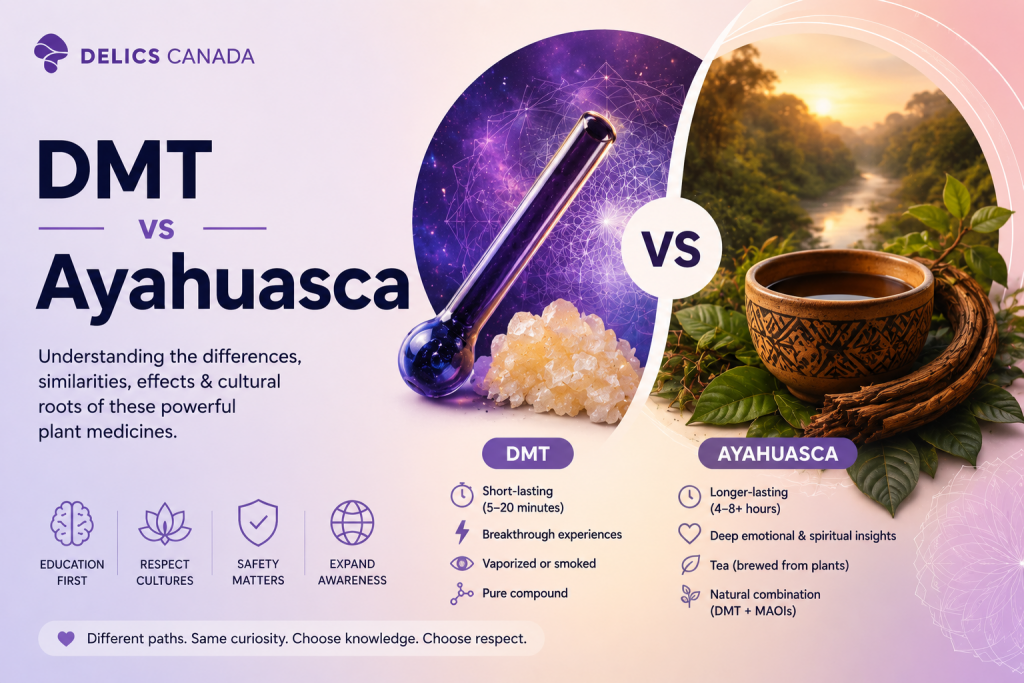
- DMT: Is typically vaporized or smoked. This method delivers the compound directly to the bloodstream through the lungs, resulting in a rapid and intense onset of effects. It can also be injected, though this is less common.
- Ayahuasca: Is ingested as a brewed tea. The oral route of administration means the DMT is absorbed through the digestive system. The presence of MAOIs in the brew prevents the breakdown of DMT, allowing it to cross the blood-brain barrier and produce its psychoactive effects. This process is much slower than inhalation, leading to a more gradual onset.
Duration and Onset: A Sprint vs. a Marathon
The differing methods of administration and composition lead to a stark contrast in the timeline of the psychedelic experience.
- DMT: The effects of smoked DMT are almost instantaneous, with the peak of the experience occurring within minutes. The entire journey is typically over within 15-30 minutes, although the after-effects can linger for up to an hour. This has earned it the nickname “the businessman’s trip.”
- Ayahuasca: The Ayahuasca experience is a much longer and more drawn-out affair. After drinking the brew, it can take 20-60 minutes to feel the first effects. The experience then builds in intensity, peaking after a couple of hours and lasting for a total of 4-8 hours. This extended duration allows for a deeper and more introspective journey.
This dmt vs ayahuasca comparison of duration is a critical factor for individuals to consider when deciding which experience might be more suitable for them.
The Nature of the Experience: Intensity and Quality
While both DMT and Ayahuasca are known for their powerful visionary effects, the quality and nature of the experience are quite different.
- DMT: A DMT trip is often described as a “breakthrough” experience, where the user feels as though they have been transported to another dimension. The visuals are often characterized by complex geometric patterns, and encounters with seemingly autonomous entities or “machine elves” are commonly reported. The experience is intensely immersive and can be overwhelming due to its rapid onset and sheer intensity.
- Ayahuasca: The Ayahuasca journey is often described as more of a dialogue with the self and the spirit of the plants. While it can also be intensely visual, the experience is more grounded and introspective. Ayahuasca is often associated with a “purge,” which can involve vomiting or diarrhea. This is seen as a cleansing process, both physically and emotionally, and is considered an integral part of the healing journey. The experience is often more emotional and can bring up repressed memories and deep-seated psychological material for processing and healing.
For those seeking a psychedelic journey, understanding this dmt vs ayahuasca comparison in the nature of the experience is vital. For those looking to explore psychedelics, we offer a range of products, including DMT and other psychedelics like magic mushrooms and LSD.
Therapeutic Potential: Healing and a dmt vs ayahuasca comparison
Both DMT and Ayahuasca have garnered significant attention for their therapeutic potential, particularly in the realm of mental health. However, their applications and the research surrounding them differ.
- DMT: Research into the therapeutic uses of isolated DMT is still in its early stages. However, its ability to induce profound mystical experiences suggests potential for treating conditions like depression, anxiety, and addiction. The short duration of the DMT experience also makes it a more manageable option for clinical settings.
- Ayahuasca: There is a growing body of research supporting the therapeutic benefits of Ayahuasca. Studies have shown its potential in treating depression, PTSD, and addiction. The introspective and emotional nature of the Ayahuasca experience, combined with the supportive setting of a traditional ceremony, is thought to be key to its healing power.
Safety and Harm Reduction: A Crucial Consideration
As with any powerful psychedelic substance, safety and harm reduction are paramount. This is another area where our dmt vs ayahuasca comparison reveals important distinctions.
- DMT: The primary risks associated with DMT are psychological. The intensity of the experience can be overwhelming and potentially traumatic if the user is not prepared. It is crucial to use DMT in a safe and comfortable environment, with a trusted sitter present.
- Ayahuasca: Ayahuasca carries additional risks due to the presence of MAOIs. Individuals taking certain medications, particularly SSRIs, can have dangerous and potentially fatal interactions with MAOIs. It is also essential to follow a specific diet (known as a “dieta”) before and after an Ayahuasca ceremony to avoid adverse reactions. For this reason, it is strongly recommended to only consume Ayahuasca under the guidance of an experienced and reputable shaman or facilitator.
FAQ: DMT vs Ayahuasca
Is Ayahuasca just a longer DMT trip?
No. While DMT is the primary psychoactive component in Ayahuasca, the presence of MAOIs and other alkaloids in the brew creates a qualitatively different experience. The slow onset, long duration, and introspective nature of the Ayahuasca journey are distinct from the rapid, intense, and immersive experience of smoked DMT.
Which is more intense, DMT or Ayahuasca?
This is a subjective question, as “intensity” can be defined in different ways. Smoked DMT is more intense in terms of its rapid onset and the overwhelming nature of the experience. However, the emotional and psychological intensity of a 6-hour Ayahuasca journey can be just as, if not more, profound.
Can I make Ayahuasca myself?
While it is technically possible to brew Ayahuasca, it is strongly discouraged. The preparation is complex, and the potential for dangerous interactions with medications and foods is high. It is much safer to consume Ayahuasca in a traditional ceremonial setting with an experienced guide.
Conclusion: Two Paths to the Same Destination?
In conclusion, while DMT and Ayahuasca share a common psychoactive compound, they offer two very different paths to a psychedelic experience. The dmt vs ayahuasca comparisonhighlights the differences in their composition, administration, duration, and the nature of the journey itself. DMT offers a short, intense, and immersive dive into another reality, while Ayahuasca provides a longer, more introspective, and emotionally focused healing journey.
Ultimately, the choice between DMT and Ayahuasca depends on the individual’s intentions and what they are seeking from a psychedelic experience. Both substances have the potential to be powerful tools for personal growth and transformation, but they must be approached with respect, caution, and a commitment to harm reduction.
Ready to explore the world of psychedelics? Browse our shop for a curated selection of high-quality products, including Ketamine, MDMA, and more.
