
Psychedelics
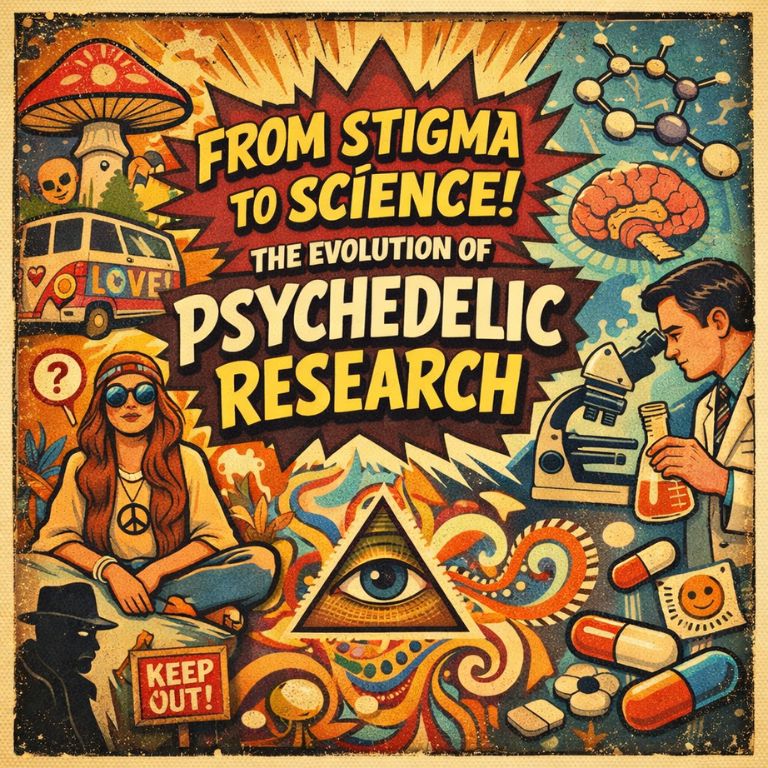
🧠🌿 From Stigma to Science: The Evolution of Psychedelic Research 🌿🧠
Apr
For much of modern history, psychedelics were defined by fear, misunderstanding, and controversy. Once studied by scientists and clinicians, they were later pushed into the shadows—labeled as dangerous, irresponsible, and unworthy of serious inquiry.
Today, that narrative is changing.
Across universities, research hospitals, and scientific journals, psychedelics are being revisited not as cultural symbols, but as subjects of rigorous scientific study. This shift—from stigma to science—marks one of the most dramatic turnarounds in modern research history.
🕰️ Early Promise, Abrupt Shutdown
In the 1950s and 1960s, psychedelics were actively studied for their potential role in understanding the mind. Early researchers explored how these substances affected perception, emotion, and behavior, publishing hundreds of papers in respected medical journals.
Then came the backlash.
Political pressure, cultural panic, and moral fear overtook scientific curiosity. Psychedelics became associated with rebellion rather than research, leading to widespread prohibition and the near-total shutdown of legitimate study.
For decades, scientific progress was frozen—not because questions were answered, but because asking them became unacceptable.
🧠 What Changed?
The modern revival of psychedelic research didn’t happen overnight. It emerged slowly, driven by a combination of new scientific tools, changing cultural attitudes, and unmet mental health needs.
Key shifts included:
- Advances in brain imaging and neuroscience 🧠🔬
- A growing openness to discussing mental health 🗣️
- Recognition that traditional approaches don’t work for everyone
- Strong ethical frameworks and institutional oversight ⚖️
With these changes, researchers were finally able to revisit old questions—this time with better data, stricter controls, and clearer boundaries.
🧪 The Return of Serious Science
Today’s psychedelic research looks nothing like its early predecessors.
Modern studies focus on:
- Brain connectivity and neuroplasticity 🧠⚡
- Emotional processing and perspective change
- Rigid vs. flexible thought patterns
- Long-term integration rather than short-term effects
Rather than chasing sensational experiences, scientists are studying mechanisms—how the brain organizes perception, meaning, and self-reflection.
This shift toward evidence, not ideology, is what gives the current era its legitimacy.
⚖️ Ethics at the Center
One major difference between past and present research is ethics.
Modern psychedelic studies emphasize:
- Careful participant screening 🛡️
- Informed consent and transparency
- Controlled, supportive environments
- Integration and follow-up after experiences 📝
The goal isn’t mass adoption—it’s responsible understanding. Ethics are no longer an afterthought; they’re foundational.
🌍 Cultural Re-Contextualization
Another important evolution is how psychedelics are discussed culturally.
Rather than being framed as symbols of rebellion, they’re now part of conversations around:
- Mental health and emotional well-being 🌱
- Consciousness and self-awareness 🌌
- Mindfulness, therapy, and personal growth
At the same time, there’s growing recognition of Indigenous and traditional knowledge—acknowledging that modern science is revisiting practices that existed long before Western research.
🔮 What the Future Holds
The shift from stigma to science doesn’t mean psychedelics are universally accepted—or ever will be.
But it does mean the conversation has matured.
Instead of asking “Are psychedelics dangerous?”, researchers are asking:
- How does the brain create experience?
- Why do certain mental patterns become rigid?
- What role does perspective play in well-being?
These questions extend far beyond psychedelics—they reshape how we understand the mind itself.
🌌 Final Thoughts
The evolution of psychedelic research is a reminder that science doesn’t stand still. Ideas once dismissed can return—not unchanged, but refined by time, data, and humility.
Moving from stigma to science isn’t about rewriting history.
It’s about learning from it.
And this time, the conversation is built on evidence, ethics, and curiosity—not fear.
If this topic resonates, you can explore more through Delics Canada, offering carefully curated products with reliable delivery across Canada.
🛒 Browse Delics Canada
💸 Enjoy 15% off (no minimum) with code: BLOG15
🇨🇦 Canada-wide delivery only
