
Ketamine
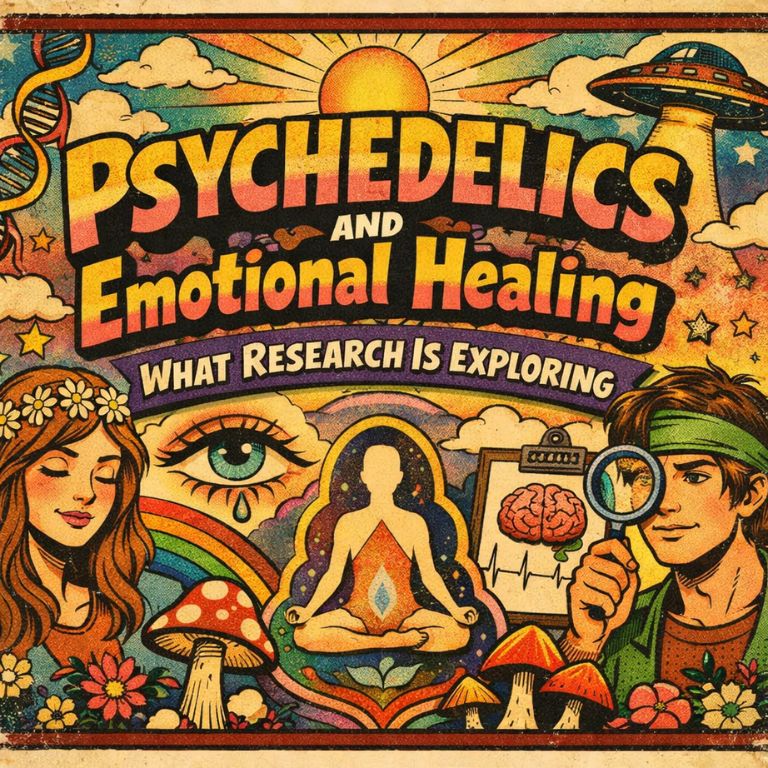
💭🌿 Psychedelics and Emotional Healing: What Research Is Exploring 🌿💭
Mar
Emotional healing is more than symptom management—it’s about understanding deep-seated patterns, processing unresolved experiences, and making peace with the inner world. In recent years, scientific research into psychedelics has expanded beyond perception and sensation to include how these substances may intersect with emotional processing, trauma, and healing.
This emerging field is cautious, thoughtful, and focused on evidence—not hype.
🧠 Emotional Healing: A Modern Research Focus
Traditional emotional healing methods—talk therapy, medication, mindfulness—help millions. But for some, emotional blocks and persistent patterns feel resistant to standard approaches.
That’s one reason the scientific community is exploring whether psychedelics may support emotional healing under controlled, supervised conditions.
Leading institutions such as the Johns Hopkins Center for Psychedelic & Consciousness Research are studying how psychedelics affect emotional experience, self-reflection, and meaning-making.
🔗 https://hopkinspsychedelic.org
Researchers aren’t looking for shortcuts. They’re asking deep questions:
- How do psychedelics affect emotional processing?
- Can they help people revisit and reframe difficult memories?
- Do they support emotional flexibility instead of avoidance?
🌱 Not Just Chemistry — Connection and Reflection
Psychedelics interact with brain networks that influence perception, memory, and emotion. One key focus is on neuroplasticity—the brain’s ability to reorganize and adapt. Research suggests that under certain conditions, psychedelics may temporarily loosen rigid patterns of thought and emotion that contribute to depressive or anxious states.
Yet emotional healing isn’t only biochemical. It’s also experiential and contextual.
Many people describe emotional shifts during or after psychedelic experiences not as sudden “fixes,” but as openings—moments where long-standing emotional narratives become visible in new ways. Scientists are studying whether this experiential shift, paired with therapy and reflection, can help people engage with their emotions more adaptively.
🪞 Reframing, Not Erasing
It’s important to note that researchers are not suggesting psychedelics erase emotional history or past pain. Instead, they’re exploring whether these experiences can change how people relate to past experiences.
Some studies indicate that when individuals revisit difficult emotional material under supportive, professional guidance, they may be more able to:
- Notice patterns without being overwhelmed
- Reinterpret past experiences with less self-blame
- Increase empathy toward themselves and others
This is a subtle shift away from suppression and toward emotional engagement and reflection.
🛡️ Safety, Structure, and Integration
Scientific research is rigorous for good reason: emotional material is sensitive, and intense experiences require careful support. Ethical studies emphasize:
- Thorough screening and preparation
- Controlled, supportive settings
- Guidance from trained professionals
- Integration afterward to process and apply insights
Research-backed programs often include multiple integration sessions that help participants translate insights into real-life coping and behavior changes.
Without this context, experiences can be confusing or overwhelming—especially when emotional content surfaces.
🔍 What the Evidence Suggests (So Far)
The body of research is growing, and while no definitive conclusions have been reached, several consistent themes have emerged:
- Psychedelics may enhance emotional awareness
- They may reduce automatic, defensive responses
- They could support rupture and repair processes in emotional narratives
- They may increase self-reflective capacity
These effects are still being studied, and scientists emphasize that psychedelics are not standalone cures. Instead, they are tools within a therapeutic context that includes preparation, support, and integration.
🌌 A New Lens on Emotional Healing
What distinguishes the current research from older perspectives is its focus on how we feel, not just what we think.
Healing isn’t about erasing emotions. It’s about developing:
- Insight
- Openness
- Compassion
- Resilience
Psychedelics are being explored not as replacements for existing therapy, but as complementary tools that might help people access emotional processes in unique ways.
If this topic resonates, you can explore more through Delics Canada, offering carefully curated products with reliable delivery across Canada.
🛒 Browse Delics Canada
💸 Enjoy 15% off (no minimum) with code: BLOG15
🇨🇦 Canada-wide delivery only
